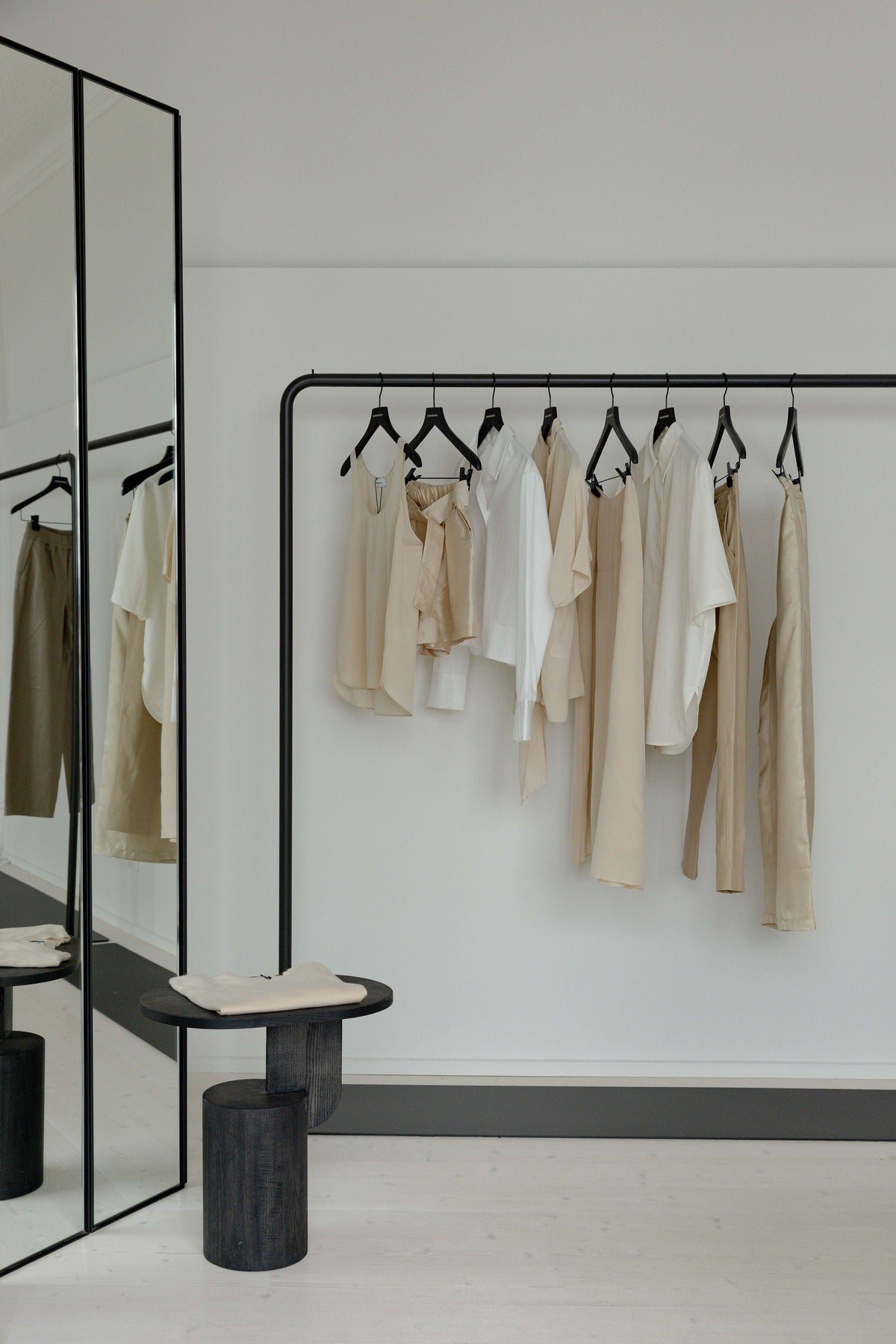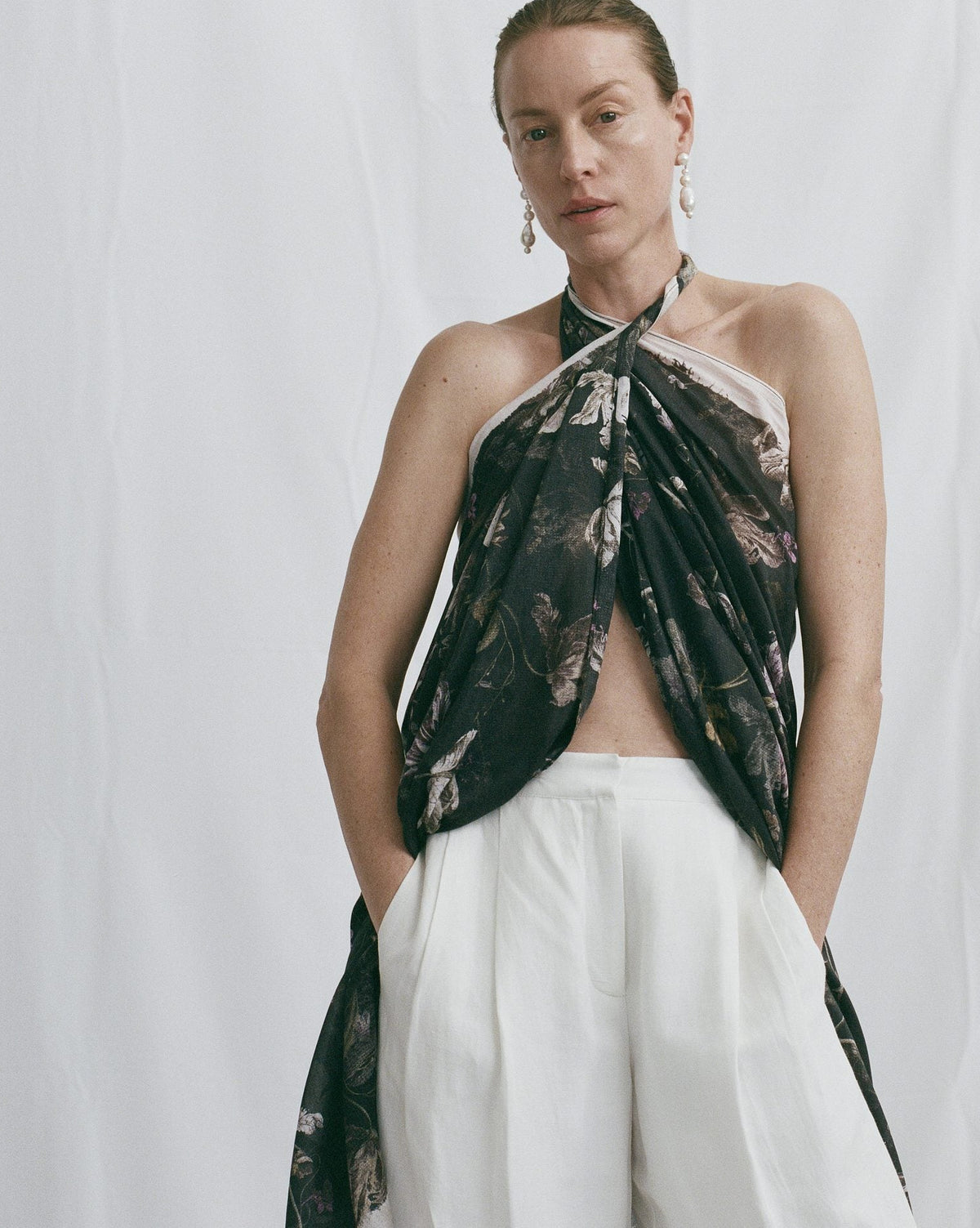
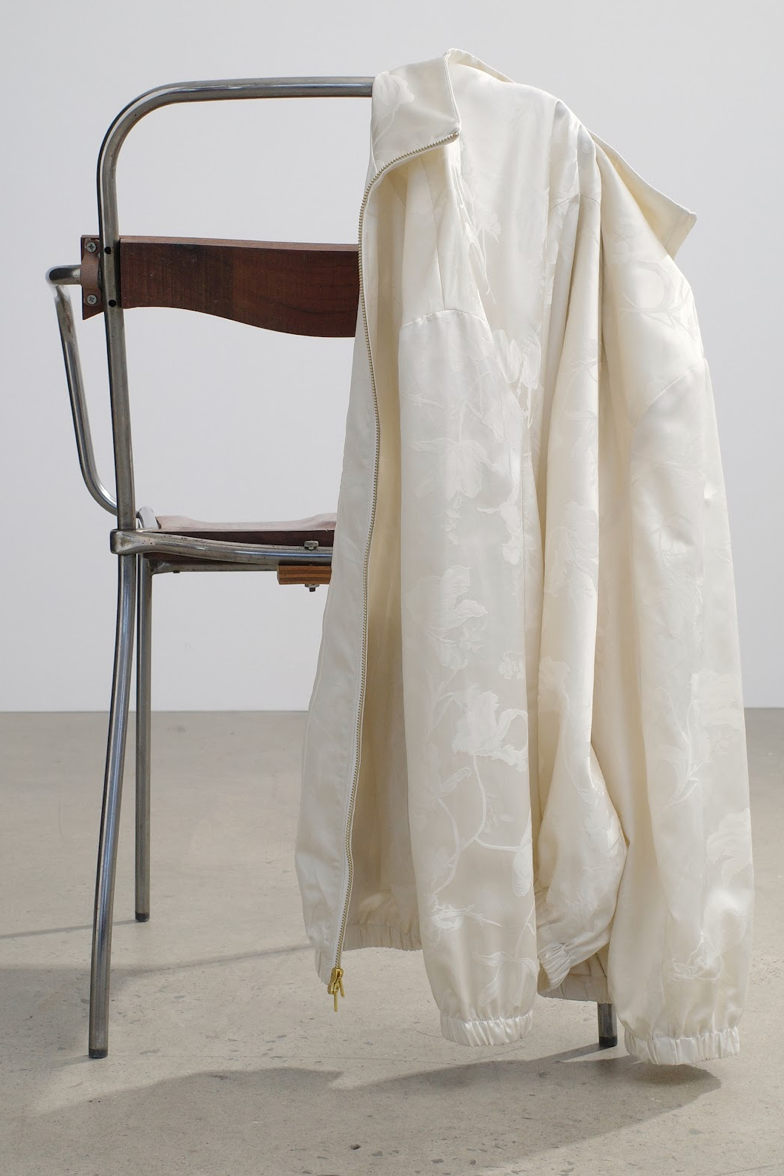
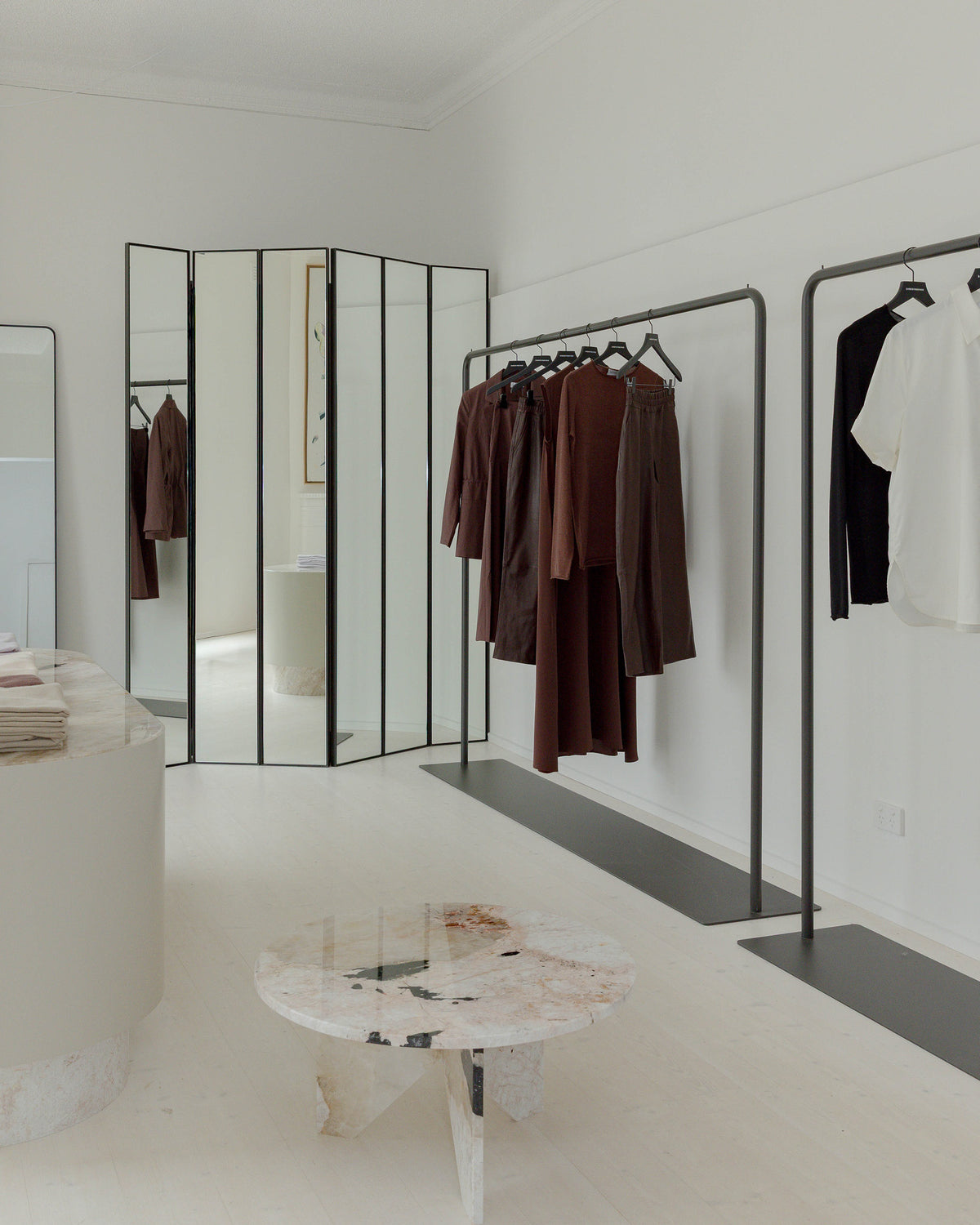



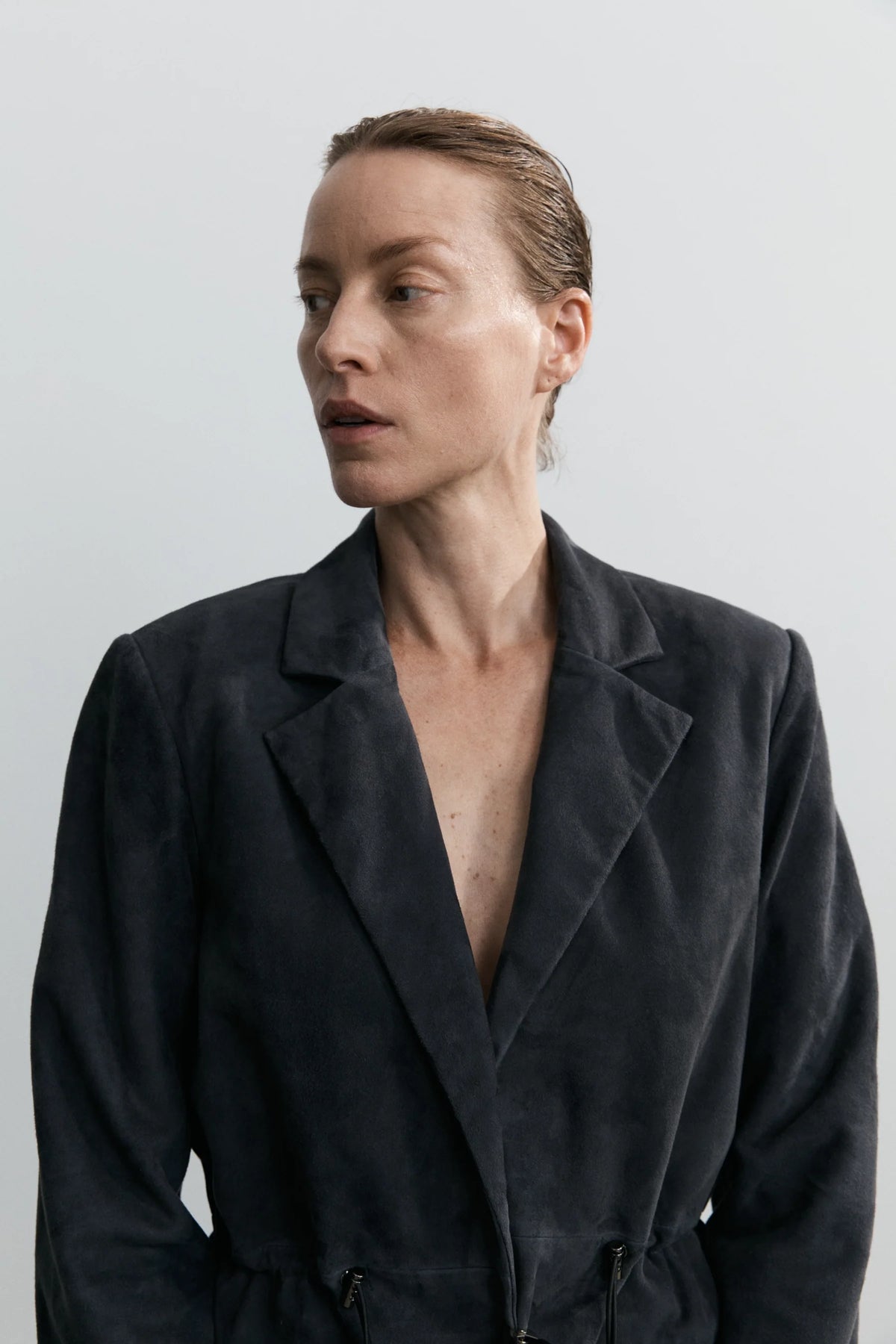
Three shapes you already know — the Cinched Blazer, the Leather Baby Bomber and the Relaxed Leather Pant — return this season in navy suede. The patterns are unchanged. Very little else is.
Why Navy and Not Black
Navy has been quietly taking on the work black used to do. Not as a softer substitute, but because it behaves differently in daylight: it reads as a colour rather than an absence of one, and it sits more comfortably beside brown, cream and denim than black manages to.
How Suede Holds Light
This is the part that explains why suede reads as expensive, and it is rarely written about.
Smooth leather has a closed surface. Light hits it and comes back in a single direction, which is why a black nappa jacket reads as one flat colour across the whole panel. Suede has a nap — a short, raised pile — and a pile scatters light in every direction at once. The same panel of navy suede shows several tones depending on which way the nap is lying and where you’re standing.
That is also why suede changes as you brush it. Draw a brush across the nap and the tone shifts. It is not damage; it is the surface doing what it is meant to do, and it is the reason a single colour in suede carries more depth than the same colour in smooth leather.
It is worth being clear about what suede actually is, because the shorthand is usually wrong. Suede is not simply the underside of the leather. Some suedes are split from the looser inner layer of the hide; others are made by turning the grain side in, or by sanding the grain to a fine short nap. Which layer is used matters far more to how a piece wears than the finish does. Our suede was chosen for its smooth handle and soft natural finish, and it is the same hide quality we use across our leather.
Not Only a Cool-Weather Material
Suede gets treated as an autumn material, which has more to do with habit than with the material.
Suede’s difficulty is water, not heat. A lightweight suede jacket in spring behaves much like any other unlined layer — it goes over a cotton shirt on a cool morning and comes off by the afternoon. The Baby Bomber is the clearest case: cropped at the waist, with wide sculptural sleeves, it was made to go over a summer dress, where the short proportion works against the longer, softer line beneath it.
Three Pieces, Three Ways


The Cinched Blazer. The adjustable waist is the point — drawn in for definition, left open for something closer to a shirt-jacket. In navy suede it takes particularly well to denim, white and cream, and it is very good over a silk dress.

The Leather Baby Bomber. Cropped, with volume through the sleeve. Best with high-waisted pants and skirts, or over the softer line of a cotton or silk dress.


The Relaxed Leather Pant. Straight, wide legs on an elasticated waist. The style that has quietly built a cult following, and in navy suede it is at its best with a white cotton or silk shirt, where the matte nap and the crispness of the shirt work against each other.
Caring for Suede
Suede asks for a few minutes of attention rather than a great deal of care.
Brush it with a suede brush, in straight strokes but from more than one direction — that is what lifts the nap back up and evens the tone. Do it before you wear a piece, not only after.
Use a protective spray made for suede before the first wear, and again occasionally. It will resist water and mark rather than prevent them, and it can slightly flatten the texture, which is the trade-off.
If a piece gets wet, let it dry away from heat and out of direct sun, then brush it once it is completely dry. Water tends to dry unevenly and can ring or flatten the nap; brushing when fully dry recovers most of it. Don’t brush while damp.
Store it in a cool, dry place, away from radiators and direct light. Small scuffs will usually lift with a fingertip and a brush.
Suede does change with wear. The nap flattens where a bag sits, and colour deepens where you touch it most. This is the same argument we make for natural leather: a material that develops is more interesting than one that only holds its first day.